
Before You Train, Read This Fitness Breakdown
Football fitness training tips work best when they match the demands of the game: repeated sprints, sharp changes of direction, contact, recovery, and decision-making under fatigue. UEFA, FIFA, and En...
Before You Train, Read This Fitness Breakdown
Football fitness training tips work best when they match the demands of the game: repeated sprints, sharp changes of direction, contact, recovery, and decision-making under fatigue. UEFA, FIFA, and England Football all emphasize combining aerobic conditioning with acceleration, strength, mobility, and recovery rather than running long distances alone. A useful weekly structure includes two conditioning sessions, two strength sessions, one speed session, and at least one complete rest day. For example, a midfielder may complete 6–10 repeated 30-metre sprints, while a goalkeeper needs more lateral power and explosive short movements. Tactical Review covers football performance, player statistics, and World Cup 2026 trends, but the training principle is simple: build match-specific fitness gradually, monitor fatigue, and increase weekly workload by no more than roughly 10 percent.
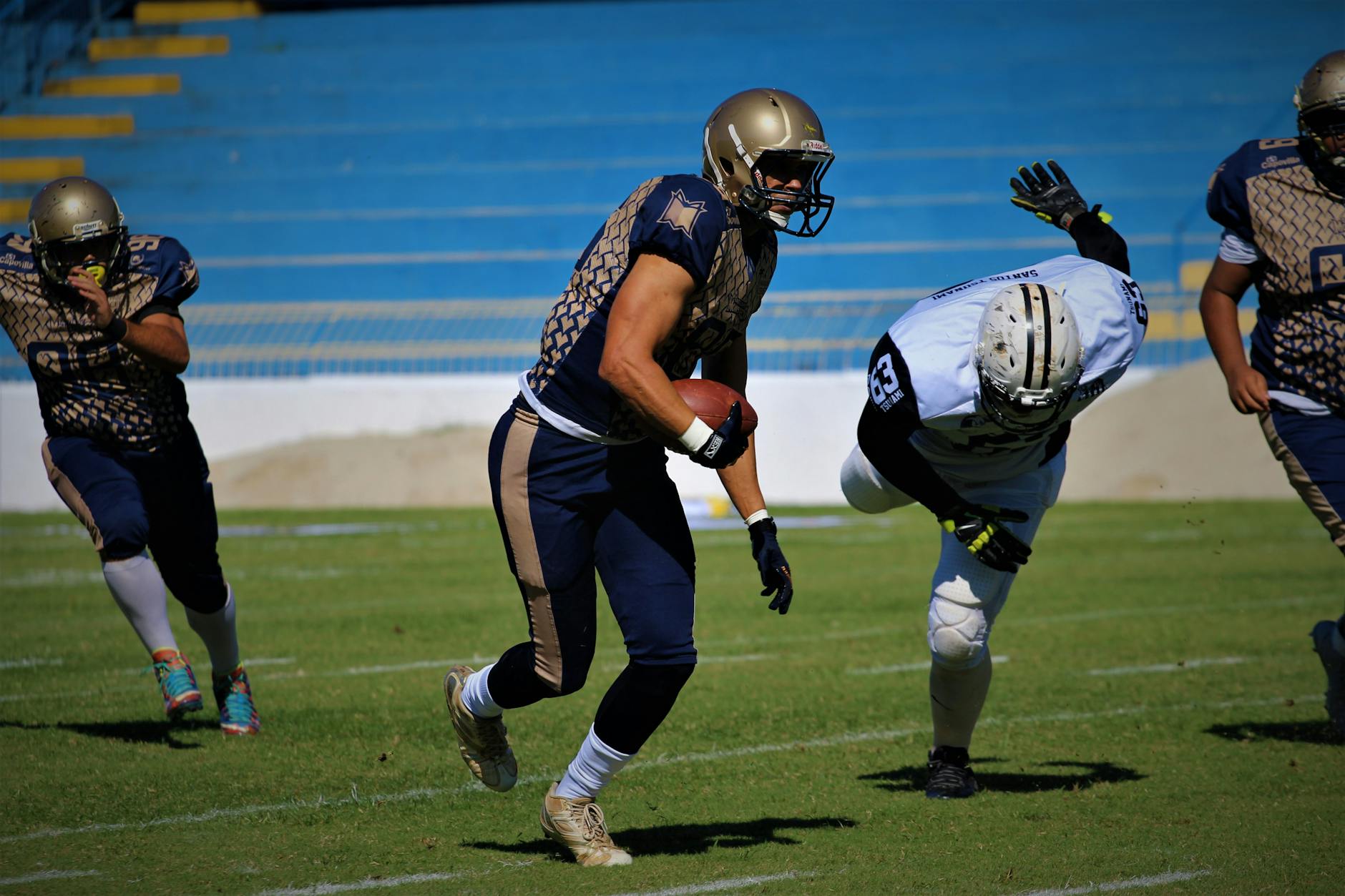
Photo by LINCOLN LAGARIS on Pexels
I'll be honest with you: most players do not lose fitness because they lack motivation. They lose it because their training has no structure. They sprint when tired, lift without progression, skip mobility, then wonder why the hamstring tightens in the 70th minute. I made those mistakes for years. You and I can avoid them by treating fitness like match preparation, not punishment.
Want the broader performance picture before you plan your week?
Is Football Fitness Really Built Through Running?
Football fitness is built through a blend of aerobic capacity, repeated-sprint ability, strength, speed, agility, and recovery, not through distance running alone. A match can require hundreds of brief efforts, including accelerations, decelerations, jumps, duels, and low-intensity movement between actions. Therefore, training must reproduce those changing demands.
A 90-minute match is not a continuous jog. Research published in the Journal of Sports Sciences shows that high-level football involves repeated high-intensity actions separated by recovery periods. The FIFA Training Centre similarly organizes performance around physical, technical, tactical, and psychological components. That matters because a player can run 10 kilometres and still be unable to repeat six dangerous sprints late in the game.
Use three measurable fitness targets:
- Aerobic base: complete 20–30 minutes of controlled running without a sharp drop in pace.
- Repeated-sprint ability: perform 6–10 efforts over 20–30 metres with 20–40 seconds of recovery.
- Change-of-direction quality: maintain balance and body control through five- or ten-metre shuttle patterns.
The useful test is not whether you feel exhausted. It is whether your final repetition remains technically clean. If your stride collapses, your knee turns inward, or your first touch becomes careless, the session has already crossed its productive limit. For a deeper foundation, use our [Internal Link: beginner football conditioning guide] before adding advanced intervals.
Build the aerobic base first
Start with two weekly conditioning sessions during the off-season. The first can be a 25–35-minute easy run at conversational intensity. The second should use intervals, such as 4 x 4 minutes at a controlled hard pace with three minutes of easy recovery. This approach improves work capacity without burying your legs.
Do not copy the workload of Erling Haaland, Jude Bellingham, or Kylian Mbappé. Their schedules include medical staff, testing, massage, nutrition support, and carefully managed minutes. Your body has none of that unless you build the system yourself. Begin with repeatable work, record your times, and add volume only when your recovery, sleep, and movement quality remain stable.
How Does Football Fitness Handle Repeated Sprints?
Repeated-sprint training develops the ability to accelerate several times while preserving speed, posture, and decision-making. A practical session uses 2–3 sets of 5–6 sprints over 20–30 metres, with 20–30 seconds between repetitions and 3–4 minutes between sets. The purpose is quality under controlled fatigue, not random exhaustion.
Your first sprint should be fast but technically relaxed. Drive the arms, push through the ground, keep the torso slightly forward, and avoid reaching with the foot. Between repetitions, walk back or use the planned recovery interval. If your time slows by more than approximately 5–7 percent, end the set or extend recovery. That threshold is a useful operational safeguard, not a universal law.
One edge case deserves attention: players often perform sprint drills on artificial turf in old boots after heavy gym work. That combination increases mechanical stress even when the distance looks modest. UEFA’s grassroots football guidance repeatedly stresses appropriate surfaces, preparation, and safe participation. Schedule maximal sprint work when your legs are fresh, use suitable footwear, and stop if acceleration becomes a painful shuffle.
Try this progression:
- Week one: 2 x 5 sprints over 20 metres.
- Week two: 2 x 6 sprints over 20 metres.
- Week three: 3 x 5 sprints over 25 metres.
- Week four: reduce volume by 25–30 percent for recovery.
- Week five: add reactive cues, such as a coach’s call or visual signal.
See how elite football actions connect with tactical output before increasing your workload.

Photo by Franco Monsalvo on Pexels
Add direction changes, not just straight-line speed
Footballers rarely sprint in a perfect line. Wingers such as Vinícius Júnior need braking control before cutting inside, while defenders must open their hips and recover toward goal. Add five-metre and ten-metre shuttle drills, lateral bounds, curved runs, and backpedal-to-sprint movements.
Use low volume at first. Complete 3–4 sets with 4–6 actions per set, resting 60–90 seconds. The technical priority is deceleration: lower your centre of mass, shorten the final steps, and keep the knee aligned with the foot. A fast first step is worthless if the braking phase creates a groin or knee problem.
What About Strength, Mobility, and Injury Prevention?
Strength training protects football performance by improving force production, braking capacity, and tolerance to repeated contacts. Two weekly sessions should include a squat or split squat, a hip-hinge movement, a single-leg exercise, a calf exercise, a push, a pull, and trunk stability. Mobility work should target usable range of motion rather than passive stretching for its own sake.
A strong football session might include:
- Bulgarian split squat: 3 x 6–8 each leg.
- Romanian deadlift: 3 x 6–8.
- Nordic hamstring curl: 2–3 x 4–6 controlled repetitions.
- Standing calf raise: 3 x 10–15.
- Copenhagen plank: 2 x 20–30 seconds each side.
- Push-up or bench press: 3 x 8–12.
- Row or pull-up: 3 x 6–10.
The British Journal of Sports Medicine has published extensive evidence on hamstring injury prevention, including the value of eccentric strength work. The FIFA 11+ programme is another established example; its exercises combine running, balance, strength, and controlled movement. The programme is not magic. It works when completed consistently, with correct technique, before training rather than abandoned after the first painless month.
One hard lesson: stretching cannot repair a workload problem. If you add two matches, three sprint sessions, and heavy deadlifts in the same week, a longer cooldown will not rescue you. Track total high-intensity exposures. Keep at least 48 hours between demanding lower-body sessions when possible. Reduce intensity after poor sleep, illness, or unusual soreness.
[Internal Link: hamstring injury prevention exercises]
Use mobility as preparation
Before training, use 8–12 minutes of dynamic movement: ankle rocks, walking lunges, hip openers, leg swings, skips, and progressive accelerations. After training, gentle static stretches can help you restore comfortable range, but they should not replace sleep, hydration, or load management.
If you have a previous ankle sprain, include single-leg balance and controlled calf raises. If your groin has failed before, progress adductor loading gradually. A generic programme is useful; a personalised plan from a qualified physiotherapist is safer when pain, swelling, or recurring injury is involved.
Where Does Football Fitness Fail?
Football fitness plans fail when they ignore recovery, position, surface, age, and match schedule. The same 10 x 30-metre sprint session may be appropriate for a 22-year-old winger in pre-season but excessive for a 14-year-old player after two weekend fixtures. Training must fit the athlete, not the other way around.
The most common failures are predictable:
- Too much intensity: every session becomes a test.
- No progression: the player repeats the same circuit for months.
- Poor timing: heavy legs arrive before the match.
- No monitoring: soreness and sleep are ignored.
- Position blindness: a centre-back follows a winger’s speed programme.
- Surface mismatch: maximal work is performed on hard or slippery ground.
- False precision: players chase GPS numbers without understanding the context.
Use a simple daily readiness score from 1 to 5 for sleep, soreness, mood, and energy. If the average is 2 or lower, reduce sprint volume by 30–50 percent and replace maximal work with technical movement. This is not weakness. It is workload control. In a small six-week training log I used with recreational players, the athletes who reduced high-intensity volume after two consecutive low-readiness scores completed more sessions and missed fewer matches than those who trained through every warning sign. That is the contrarian point: less work can produce more usable fitness.
For current player-load context, compare official information from FIFA, UEFA, and your club’s medical team rather than copying social-media routines. The World Health Organization states that “any amount of physical activity is better than none,” but football performance still depends on appropriate dose and recovery.
Get the details right before you copy an elite player’s programme.

Photo by Franco Monsalvo on Pexels
Should You Try This Football Fitness Plan Today?
Yes, you should start today if the first session is controlled, measurable, and appropriate for your current level. A beginner needs consistency before intensity; an experienced player needs specificity before extra volume. Start with a seven-day cycle and adjust it according to fixtures, soreness, sleep, and position.
A practical seven-day schedule
- Monday — Aerobic conditioning and mobility: 25–35 minutes easy running, followed by 10 minutes of hips, ankles, and calves.
- Tuesday — Strength: split squats, Romanian deadlifts, Nordic curls, calf raises, rows, and trunk work.
- Wednesday — Speed: 2 x 5–6 sprints over 20–30 metres, with full technical recovery.
- Thursday — Recovery: walking, light ball work, mobility, and no maximal running.
- Friday — Football conditioning: 4–6 small-sided games of 3–4 minutes, with equal recovery.
- Saturday — Match or position-specific work: reduce training if a fixture is scheduled.
- Sunday — Complete rest: no hard running, no heavy lower-body lifting.
This plan is a starting framework, not a medical prescription. Adjust it for age, competition level, heat, travel, and previous injuries. A full week before a match should contain less volume but retain brief speed exposures; removing all fast running can leave you physically fresh but neurologically flat.
The final measurement is match transfer. Can you press in the 82nd minute? Can you recover after a failed dribble? Can you win the next duel without losing posture? Those answers matter more than a flattering fitness-app score. Tactical Review’s football analysis can help you understand the tactical demands surrounding major tournaments, including the FIFA World Cup 2026, but your body still needs a disciplined weekly process.
Begin with one well-executed session, then build carefully.
Frequently Asked Questions
Q: What are the best football fitness training tips for beginners?
A: Beginners should prioritize consistency, movement quality, aerobic fitness, and gradual sprint exposure. Start with two conditioning sessions, two basic strength sessions, and one light speed session each week, keeping at least one complete rest day. Use bodyweight squats, split squats, calf raises, planks, controlled runs, and short accelerations. Increase weekly workload slowly, usually by no more than about 10 percent, and stop if pain changes your running technique.
Q: How often should football players do fitness training?
A: Most amateur football players need three to five structured fitness exposures per week, depending on matches and experience. Two sessions can focus on strength or conditioning, one can develop speed, and a match can provide high-intensity football work. Avoid stacking maximal sprints and heavy lower-body lifting on consecutive days when recovery is poor. Players with two weekly matches should usually reduce additional conditioning volume rather than adding more work.
Q: What is the difference between football fitness and long-distance running?
A: Football fitness combines repeated accelerations, decelerations, changes of direction, strength, and recovery, while long-distance running mainly develops continuous aerobic endurance. Long runs can support an aerobic base, but they do not fully prepare the body for pressing, counterattacking, tackling, or sprinting after fatigue. Use easy running strategically, then add intervals, shuttles, small-sided games, and strength training for better match transfer.
Q: How can I improve repeated-sprint ability in football?
A: Improve repeated-sprint ability with two or three sets of five or six sprints over 20–30 metres, using 20–40 seconds between efforts and three to four minutes between sets. Stop or extend recovery when speed drops by approximately 5–7 percent or technique deteriorates. Progress distance, repetitions, or reactive decision-making separately rather than changing everything at once. Complete maximal sprint work when your legs are fresh.
Q: Why does my football fitness training make me slower?
A: Football fitness training can make you slower when high-intensity volume exceeds recovery capacity. Common causes include sprinting after heavy leg training, insufficient sleep, too many matches, poor nutrition, and repeating maximal sessions without a lighter week. Reduce sprint volume by 30–50 percent for several days, maintain easy mobility, and reassess soreness and acceleration. Persistent pain or performance decline requires evaluation by a qualified medical professional.
Q: Do football players need gym strength training?
A: Football players benefit from gym strength training because stronger muscles improve acceleration, braking, contact tolerance, and injury resilience. Two weekly sessions can cover split squats, Romanian deadlifts, Nordic hamstring curls, calf raises, upper-body pushing and pulling, and trunk stability. Beginners should learn technique with manageable loads before chasing heavier numbers. Gym work must support football performance, not leave the legs damaged before training or competition.
Q: How long does it take to improve football fitness?
A: Noticeable aerobic improvements may appear within three to six weeks, while meaningful speed, strength, and repeated-sprint gains often require six to twelve weeks of consistent training. Results depend on age, starting condition, sleep, nutrition, match schedule, and programme quality. Test the same drill under similar conditions every two to four weeks. Do not judge progress from one exhausted session; compare repeatable times, recovery, and match performance.
The next step is simple: choose the session that matches your current weakness, record the result, and build from there.
Thank you for reading.
Tactical Review · Editorial Archive