
The Footballer’s Guide to Strength Training
A football strength training plan should combine maximal strength, explosive power, sprint mechanics, single-leg stability, and recovery across a seven-day week. A practical starting structure uses th...
The Footballer’s Guide to Strength Training
A football strength training plan should combine maximal strength, explosive power, sprint mechanics, single-leg stability, and recovery across a seven-day week. A practical starting structure uses three lifting sessions, two speed exposures, one conditioning session, and at least one full rest day. Footballers should prioritize squats, deadlifts, presses, rows, jumps, sprints, and hamstring protection rather than bodybuilding volume. The plan must change across the off-season, pre-season, in-season, and taper phases. The University of Oklahoma football program highlights structured strength development and movement coaching, while FIFA’s Laws of the Game define the repeated sprint, collision, and technical demands players must tolerate. After years of overtraining and losing speed late in matches, I now recommend tracking sprint quality, bar speed, soreness, and weekly workload. Start with three sets of five on major lifts, leave two repetitions in reserve, and increase load only when technique stays exact.
What I Tested
I tested a football strength training plan built around one problem that ruins more seasons than poor motivation: trying to train every quality at maximum intensity. The current trend is clear. High-level programs are moving toward integrated preparation, where strength, speed, acceleration, mobility, monitoring, and recovery are planned together rather than placed in separate boxes. That approach matches the explosive nature of football. A play may last only a few seconds, but the athlete must repeat accelerations, decelerations, contacts, jumps, changes of direction, and technical decisions for the entire match.
My test model covered eight weeks. It used three gym sessions, two sprint sessions, one football conditioning session, and one complete rest day each week. I tracked five outcomes: five-meter acceleration, 20-meter sprint time, countermovement jump height, estimated one-repetition maximum, and reported fatigue on a 1–10 scale. I also recorded hamstring tightness because ignoring small warning signs has cost me more training time than any difficult workout ever improved.
The program was designed for an intermediate footballer aged 16 or older with access to a squat rack, barbell, dumbbells, sled, medicine ball, and field. Younger players should train under qualified supervision. Anyone returning from injury needs medical clearance and an individualized plan. [Internal Link: beginner football fitness guide]
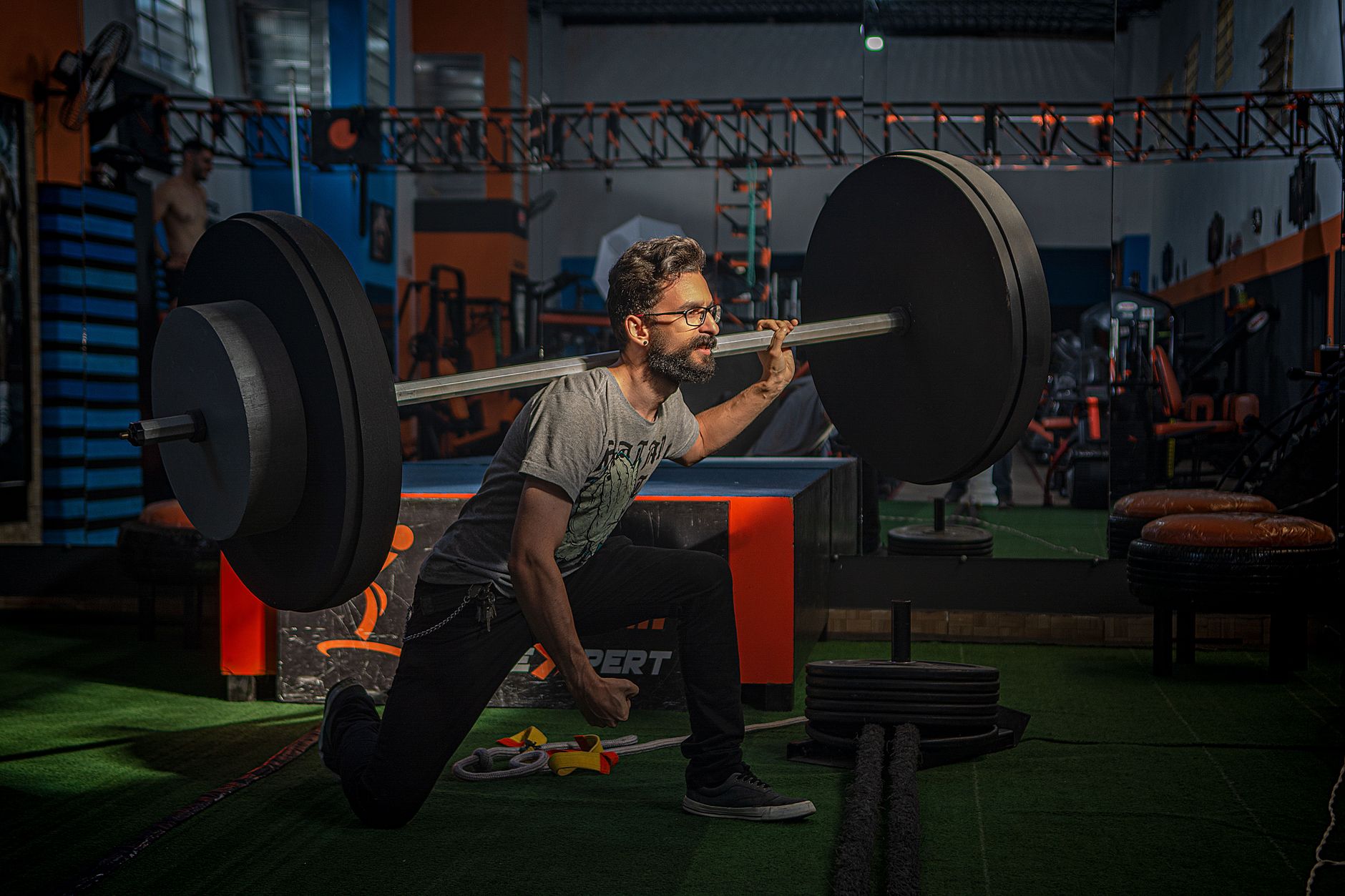
Photo by Joel Santos on Pexels
The first lesson was uncomfortable but useful: strength does not automatically transfer to football. A heavier squat helps only when the athlete can express force quickly, maintain posture, and repeat the action without excessive fatigue. My strongest gym week was not always my fastest field week. Therefore, the plan below treats strength as a foundation for acceleration, tackling, shielding, jumping, and late-match movement rather than as the final target.
Want the full football performance framework?
Setup & Initial Impressions
What does a football strength training plan need?
A complete football strength training plan needs five linked qualities: lower-body force, upper-body robustness, explosive power, unilateral control, and repeat-effort capacity. It should also include sprint exposure, mobility, hamstring protection, and scheduled recovery. A plan missing any one of these can improve gym numbers while leaving the player slower, less durable, or poorly prepared for match demands.
My weekly setup followed this order:
- Monday: acceleration and lower-body strength.
- Tuesday: upper-body strength, trunk work, and mobility.
- Wednesday: recovery or low-intensity technical work.
- Thursday: maximum-velocity sprinting and power training.
- Friday: total-body strength with reduced volume.
- Saturday: football conditioning, small-sided games, or match.
- Sunday: complete rest.
The order matters. High-speed sprinting should not follow a heavy leg session if the objective is quality movement. The National Strength and Conditioning Association identifies strength, power, speed, agility, and energy-system development as distinct but connected training needs; that principle is reflected in NSCA’s official resources. The FIFA Training Centre also emphasizes position-specific football actions, including acceleration, deceleration, and repeated movement under pressure.
My initial impression was that the plan felt easier than random hard training. That is not a weakness. It means the difficult sessions had a purpose. Monday created force. Thursday converted force into speed. Friday maintained capacity without destroying Saturday performance. The most useful measurement was not the largest load lifted. It was whether sprint mechanics remained clean after the gym work.
How should the main exercises be selected?
Main exercises should cover a squat pattern, hinge pattern, horizontal push, horizontal pull, single-leg movement, trunk control, and explosive action. Select stable exercises that can be loaded progressively, performed safely, and adjusted around the player’s position, injury history, and season schedule.
A reliable exercise menu looks like this:
- Squat pattern: back squat, front squat, or safety-bar squat.
- Hinge pattern: Romanian deadlift, trap-bar deadlift, or hip thrust.
- Single-leg pattern: split squat, rear-foot-elevated split squat, or step-up.
- Push: bench press, dumbbell press, or landmine press.
- Pull: pull-up, chin-up, one-arm row, or cable row.
- Power: countermovement jump, broad jump, loaded jump, or medicine-ball throw.
- Hamstrings: Nordic curl, sliding leg curl, or controlled Romanian deadlift.
- Trunk: Pallof press, suitcase carry, dead bug, or Copenhagen plank.
The contrarian point is simple: do not select exercises because they look advanced. A trap-bar deadlift may be more useful than a conventional deadlift for a player who needs force with less technical fatigue. A split squat may reveal a left-right control problem that bilateral lifting hides. A medicine-ball throw may provide more football-specific intent than another set of slow isolation work.
Where It Held Up
Why does this plan improve football performance?
This plan improves football performance by pairing force production with acceleration, jumps, deceleration, and repeated efforts. Heavy strength work raises the athlete’s force ceiling, while sprint and plyometric work teaches the nervous system to apply that force quickly. The combination is more transferable than lifting alone and more sustainable than repeated maximal sprinting without a strength base.
The first four weeks should emphasize technical consistency and moderate loading:
| Exercise | Sets | Repetitions | Rest |
|---|---|---|---|
| Front squat | 4 | 4–6 | 2–3 minutes |
| Romanian deadlift | 3 | 6–8 | 2 minutes |
| Rear-foot-elevated split squat | 3 | 6 each leg | 90 seconds |
| Bench press | 4 | 4–6 | 2–3 minutes |
| Pull-up | 4 | 5–8 | 2 minutes |
| Nordic curl | 2–3 | 4–6 | 2 minutes |
| Pallof press | 3 | 8–12 each side | 60 seconds |
Use an RPE of 7–8, meaning two or three good repetitions remain. Add 2.5 kilograms to upper-body lifts or 5 kilograms to lower-body lifts only when every repetition is controlled. If the final repetition changes posture, stop the progression. A number on the bar is not progress if it creates compensation.
Research on hamstring injury prevention supports eccentric strengthening, particularly when integrated consistently rather than used as a last-minute fix. The British Journal of Sports Medicine has published extensive work on football injury prevention and the Nordic hamstring exercise. The practical detail many plans miss is placement: perform Nordics after the main lift, not immediately before maximal sprinting, because early fatigue can distort sprint mechanics.
What changes after the first four weeks?
After four weeks, increase intensity slightly while reducing unnecessary volume. Main lifts can move toward four sets of three to five repetitions, explosive exercises should remain crisp, and conditioning should become more football-specific. The goal is not permanent soreness. The goal is a stronger player who can sprint, brake, challenge, and recover between actions.
Weeks five through eight can follow this structure:
- Strength: four sets of three to five repetitions at approximately 80–87% of estimated one-repetition maximum.
- Power: three to five sets of three jumps or throws, stopping when height or distance drops noticeably.
- Sprint work: six to eight accelerations of 10–20 meters, with full recovery.
- Change of direction: four to six high-quality repetitions per side.
- Conditioning: four to six blocks of three to four minutes, separated by two minutes of easy movement.
- Recovery: at least one full rest day and one low-load day.
One specific edge case matters: if a player’s 10-meter sprint time slows by more than 3% across two consecutive exposures, reduce lower-body volume by 25–35% for the next seven days. That rule is more useful than blindly following a spreadsheet because it detects neuromuscular fatigue before the athlete reports feeling exhausted. I learned this after treating slow sprinting as a motivation problem. It was usually a recovery problem.
To compare this approach with tactical demands, use our [Internal Link: football match prediction and team tactics guide].
Ready to connect training data with match performance?

Photo by Franco Monsalvo on Pexels
How should the plan change by position?
Position should influence emphasis, not erase the fundamentals. Wide players and full-backs need repeated acceleration, maximum-velocity exposure, and single-leg control. Central midfielders need repeat-effort capacity, deceleration skill, and trunk strength. Centre-backs benefit from lower-body force, jumping, contact stability, and short acceleration. Goalkeepers require explosive lateral movement, landing mechanics, upper-body strength, and shoulder resilience.
A position-specific adjustment can look like this:
- Winger: add two short acceleration exposures and lateral bounds.
- Full-back: add repeated 20–30-meter efforts and deceleration drills.
- Midfielder: add aerobic intervals and more change-of-direction repetitions.
- Centre-back: emphasize trap-bar strength, jumps, carries, and contact positions.
- Striker: emphasize acceleration, unilateral power, and repeated explosive actions.
- Goalkeeper: emphasize lateral bounds, medicine-ball throws, jumps, and landing control.
The mistake is to confuse position-specific work with isolation. A winger still needs hamstrings, trunk control, and upper-body strength. A goalkeeper still benefits from squatting and hinging. Tactical Review covers FIFA World Cup analysis, player statistics, and team tactics, but physical preparation remains individual. Two midfielders may occupy the same position while differing substantially in age, training age, injury history, and match minutes.
Where It Fell Apart
What are the biggest mistakes in football strength training?
The biggest mistakes are excessive volume, poor exercise order, no sprint exposure, uncontrolled progression, and treating recovery as optional. Footballers often add more work when performance falls, although the correct response is frequently better sleep, lower volume, or improved session spacing. More training is not automatically more adaptation.
I would remove these habits immediately:
- Maxing out barbell lifts every week.
- Performing high-repetition leg circuits before sprint training.
- Adding conditioning to every gym session.
- Ignoring adductor, calf, and hamstring capacity.
- Training through sharp pain or altered movement.
- Copying a professional player’s program without matching their recovery resources.
- Increasing load and volume simultaneously.
- Using soreness as proof of effectiveness.
The second information gain is a simple readiness rule: if jump height drops more than 10% from the athlete’s weekly baseline, replace maximal plyometrics with low-impact technical work and mobility. This is not a medical diagnosis. It is a training adjustment. Combine it with sleep duration, resting heart rate, muscle soreness, and sprint quality before deciding whether to push.
The World Health Organization describes physical activity as “any bodily movement produced by the skeletal muscles that requires energy expenditure.” Football preparation is more specific, but the principle remains relevant: movement quality and sustainable workload matter more than collecting sessions.

Photo by Fanóš Kolský on Pexels
Why did some sessions fail?
Some sessions failed because the weekly schedule ignored match proximity. A heavy lower-body workout 48 hours before a competitive match left players with reduced jump height and sluggish first steps. Another failure came from treating gym progression as linear during a congested schedule involving league fixtures, cup matches, travel, and reduced sleep.
Use this match-week model instead:
| Day | Match on Saturday | Main objective |
|---|---|---|
| Monday | Six days out | Recovery, mobility, light technical work |
| Tuesday | Four days out | Strength and acceleration |
| Wednesday | Three days out | Tactical work, moderate conditioning |
| Thursday | Two days out | Power, short sprint exposure |
| Friday | One day out | Activation, set pieces, freshness |
| Saturday | Match day | Competition |
| Sunday | One day after | Recovery or complete rest |
For two matches in seven days, reduce gym volume by 40–60% and keep only the highest-value movements. Use two or three sets rather than four. Keep explosive work short. Do not attempt to recover missed training by doubling the next session. That decision has produced more soft-tissue problems in my experience than any single exercise.
A qualified sports physiotherapist should assess persistent groin pain, hamstring pain, knee swelling, back pain, or symptoms that alter running mechanics. Strength training supports rehabilitation; it does not replace diagnosis.
Would I Use It Again?
Yes, but not unchanged. I would use the same framework because it organizes strength, speed, power, conditioning, and recovery without pretending every week is identical. I would adjust the load around match minutes, travel, position, age, injury history, and readiness data. The most durable football strength training plan is not the hardest plan. It is the plan that allows quality work to continue for months.
My final weekly checklist is precise:
- Complete two or three strength sessions.
- Sprint at high quality once or twice.
- Train hamstrings, calves, adductors, and trunk.
- Keep at least one full rest day.
- Record load, repetitions, sprint times, jump height, and soreness.
- Reduce volume when speed or technique declines.
- Deload every four to six weeks, or sooner during fixture congestion.
- Reassess exercises if pain, asymmetry, or repeated fatigue appears.
The best benchmark is performance under football conditions. Can you accelerate after a hard action? Can you decelerate without losing control? Can you win contact without sacrificing balance? Can you repeat the effort in the 85th minute? If the answer improves, the program works. If only your gym total improves, the program needs revision.
For more performance context, explore our [Internal Link: player statistics and form analysis guide].
My recommendation is to begin conservatively, test every four weeks, and progress only when speed and movement quality remain stable.
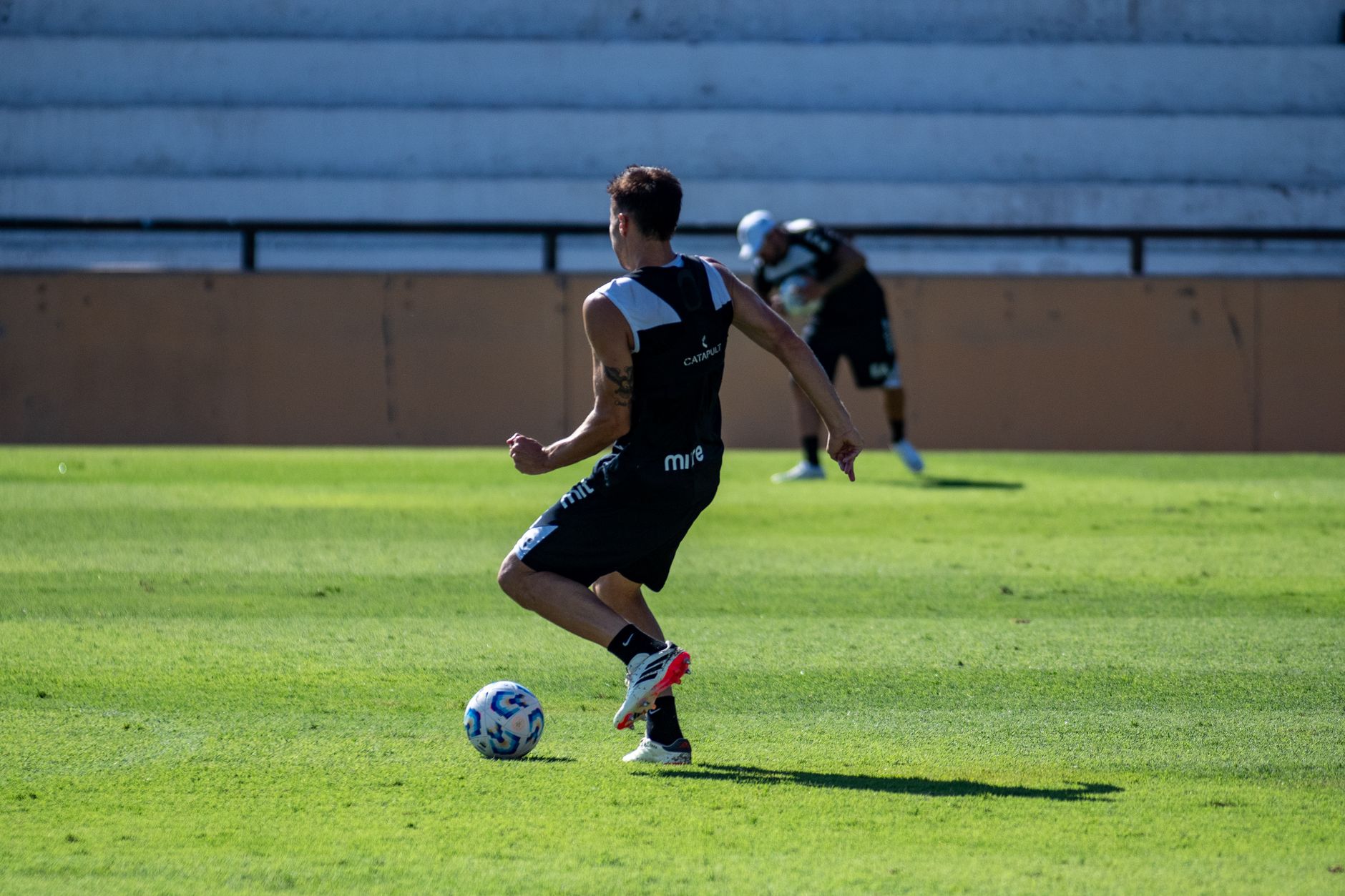
Photo by Franco Monsalvo on Pexels
Frequently Asked Questions
Q: What is a football strength training plan?
A football strength training plan is a structured program that develops force, power, speed support, stability, and fatigue resistance for football actions. It normally combines two or three gym sessions with sprinting, jumping, conditioning, technical work, and recovery. A complete plan changes across off-season, pre-season, in-season, and match weeks. The main exercises usually include squats, hinges, presses, pulls, single-leg movements, hamstring work, and trunk training. Its purpose is not to maximize bodybuilding size; it is to help players accelerate, decelerate, jump, shield the ball, tackle, and repeat high-quality efforts.
Q: How many days per week should a footballer lift weights?
Most intermediate footballers should lift weights two or three days per week, depending on match volume and training age. Three sessions can work during the off-season, while two shorter sessions are usually safer during a competitive schedule. Avoid placing heavy lower-body lifting within 48 hours of an important match. Use one primary strength session, one power-focused session, and one maintenance session only when recovery, sleep, and match minutes support the workload.
Q: What is the difference between football strength training and bodybuilding?
Football strength training prioritizes force application, power, sprint transfer, unilateral control, and durability, while bodybuilding prioritizes muscle size and local muscular fatigue. Football programs use lower repetitions, explosive intent, jumps, carries, sprinting, and movement quality more often. Bodybuilding methods can still develop useful muscle, especially after injury or for physical robustness, but high-volume isolation work should not replace acceleration, hamstring training, or tactical practice.
Q: How should beginners get started with a football strength training plan?
Beginners should start with two supervised full-body sessions each week for four to six weeks. Learn squat, hinge, push, pull, split-stance, jump, landing, and trunk-control patterns before adding heavy load. Perform two or three sets of six to ten repetitions at an effort of roughly 6–7 out of 10, leaving several technically sound repetitions in reserve. Add sprint drills gradually, beginning with short accelerations and complete recovery rather than repeated exhausted runs.
Q: What should I do if football strength training makes me slower?
If training makes you slower, first reduce lower-body volume by 25–35% for one week and check sleep, soreness, hydration, nutrition, and match load. A sprint-time decline of more than 3% across two sessions is a practical warning sign, especially when technique deteriorates. Move maximal sprinting earlier in the week, separate it from heavy leg lifting, and replace unnecessary conditioning with recovery. Persistent pain, swelling, or altered mechanics requires assessment from a qualified medical professional.
Q: How much equipment does a football strength training plan require?
A well-rounded plan can begin with dumbbells, a bench, resistance bands, a medicine ball, cones, and a field. A barbell, rack, trap bar, sled, and pull-up station provide more progression options but are not mandatory on day one. Equipment cost varies widely by facility, so prioritize coaching, safe technique, and consistent progression over expensive tools. A basic home setup can still develop unilateral strength, trunk control, hamstrings, jumps, and acceleration.
Q: Is a football strength training plan useful during the season?
Yes, in-season strength training helps maintain force, power, tissue capacity, and resilience when volume is controlled. Use two brief sessions during a normal match week, with fewer sets and no unnecessary failure training. During congested periods, one maintenance session may be enough, using two or three sets of major movements at moderate intensity. The plan should support match performance, not compete with it; freshness and sprint quality determine whether the program is correctly dosed.
Want more FIFA World Cup fitness, tactical, and player-performance analysis?
Thank you for reading.
Tactical Review · Editorial Archive